Not Me Mondays

- I am not wearing the most awkward outfit imaginable today. I would never wear leggings, a skirt, a long-sleeved shirt, and rubber boots in July. It is always sunny and warm in Canada, and never rains.
- I am not staring at a handful of nickels and pennies, which are somehow supposed to get me home on the bus. I have a chauffeur who takes me everywhere, and I never have to resort to public transportation.
- I did not get orange juice all over my BlackBerry, making it all sticky. I treat my electronic devices with total respect, and would never drop, ding, or scratch them.
- I am not considering buying nail polish remover to keep in my office, for emergencies such as chips. I am definitely not staring at my nails right now, hating the chips. I am not bothered by such shallow things.
- I am not dancing behind my desk to Avril Lavigne’s Girlfriend, which is floating through my window from the radio playing outside. I am not a sucker for teenybop music.
Paperwork is the last thing you want to do, but …
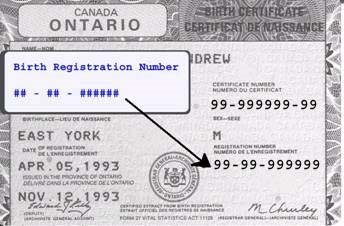
In between the thank-you-card-writing and casserole-dish-returning — oh, and diapering and feeding and washing and stuff — new moms and dads also have some important paperwork.
Here are five necessary “legal to-do’s” for after Baby is born …
- Apply for your your baby’s birth certificate. This must be issued by the province or territory (or state) where your baby is born.
- Register your baby for a health card. You do this at the same time as their birth certificate.
- Apply for your baby’s Social Insurance Number (SIN). Canadian residents can download the form online, and it is recommended that you apply in person (much faster).
- Apply for the Canada Child Tax Benefit. Woohoo! This is a tax-free monthly payment made to eligible families to help them with the cost of raising children under age 18. Am I eligible? God, I hope so.
- Apply for your baby’s passport. Yup, even babies need ’em. And since Darling Husband and I love traveling to the U.S., our babe will need one, too. Forms can be downloaded here.
Note to my future self: I’m sure your brain is total mush now, but do this! It’s important!
Hmm, I think my cranky future self just told my smug, energetic non-pregnant self to shove it, and that she has no idea what is really important until a freaking diaper is leaking all over the living room.
Tips … or just urban legends?
If you want a girl, go with shallow penetration.
If you want a boy, go with deeper penetration.
Shallow penetration, preferably with the missionary position, will deposit the sperm closer to the entrance to the vagina. This area is more acidic than closer to the cervix and acidity will work against the weaker “boy” sperm leaving more “girl” sperm available to fertilize your egg. Source.
If you want a girl, don’t orgasm.
If you want a boy, orgasm.
The body produces substances after orgasm that makes the vaginal environment more alkaline, which favors the “boy” sperm.
The contractions which accompany an orgasm help move the sperm up and into the cervix, giving the “boy” sperm an extra chance at being available when your egg is available for fertilization. Source.
Trying for a boy seems like the better deal, huh?
Baby-making basics
 What’s the best position for conceiving?
Short answer: Missionary
Long answer: It allows the deepest penetration, and therefore puts the sperm right next to the opening of your womb.
What positions should we avoid?
Short answer: Sitting, standing, or woman on top
Long answer: Gravity. It makes it harder for the sperm to swim up towards your fallopian tubes.
Should we ditch the lube?
Short answer: Yup.
Long answer: Yes, because it can kill sperm. But you can buy special TTC lubricants that actually encourage sperm to be super-swimmers.
Does the woman having an orgasm give her a better chance of conceiving?
Short answer: Yup.
Long answer: The contractions may help carry sperm further into the womb, providing the woman orgasms after — or at the same time — as the man.
OK! The sperm’s in there. Now what?
Short answer: Lie on your back.
Long answer: You can boost your chances of conceiving by staying in bed for up to 30 minutes after having sex. Lie on your back with your hips raised on a pillow. This gives the sperm a helping hand because they’re not having to swim against gravity on their way up to your fallopian tubes. It’s also effective to lie on your back and “bicycle” in the air with your legs for a few minutes after sex.
Maternity Leave 101

I have been wondering about maternity leave for a while now — who gets it? How much is it?
Well, let me tell you. They make you work for the answers! Government sites are confusing! I’m still not sure I’ve grasped everything, so don’t sue me if this information is wrong. I tried!
So, I have went through about 10,000 pages of mumbo-jumbo, and condensed it to the basic facts about maternity leave in Canada.
Let’s begin …
“What is the difference between “maternity leave” and “maternity benefits”?
- “Leave” refers to being off work, with your employer being obligated to take you back
- “Benefits” refers to the money the government pays you (part of your usual salary) when you are off after having a baby
“Do I even get maternity leave?”
You need to have been with your employer for a certain number of months …
- Alberta, Manitoba, the Northwest Territories, Nova Scotia, Nunavut, and the Yukon: 1 year (6 months in the federal jurisdiction)
- Newfoundland and Prince Edward Island: 20 weeks
- Saskatchewan: 20 weeks (in the 52 weeks before leave)
- Ontario: 13 weeks
- British Columbia and New Brunswick: No requirements with respect to length of service
- Quebec: As long as you work there the day you announce it, you’ll golden.
“How much time do I get?”
Well, let’s refer to this handy-dandy chart from BabyCenter.ca:

“Who do I tell at work?”
Talk to your HR department (if you have one). You might need to provide a medical certificate in order to qualify for maternity leave, but most provinces only require it if your employers requests it.
“When do I begin?”
- It’s up to you when you take off — a month early, etc. — but your employer must agree.
- Depending on your province, you can leave 11-17 weeks before giving birth.
“Can they really force my pregnant butt outta there?”
- Your employer can make you take a leave of absence, if they feel you can’t do your job properly because you are pregnant.
- You also can’t come back to work for at least six weeks after delivery, unless your doctor begs.
“How do I get extra time?”
- You are allowed to take a leave of two years, without pay, as an extension of maternity leave
- If your doctor certifies that you have medical problems as a result of the birth, you can be greanted an extra six weeks (without pay)
- You can sometimes extend your leave by using up vacation time or sick time
“What’s the deal with EI maternity/parental benefits?”
- They can start eight weeks before your due date, or the week of your actual delivery
- There is a two-week waiting period
- You can receive maternity benefits for up to 15 weeks
- You can receive paternal benefits for up to 35 weeks
- You are able to combine maternity and parental benefits, so that you can be off with your baby for 52 weeks (50 of them paid)
- To be eligible, an employee must have worked a minimum of 600 hours in the previous 52 weeks
- You must have been working for your company for at least 13 weeks
“How much will I get, on EI maternity/parental benefits?”
- The benefits are usually 55% of your usual salary
- There is a maximum of $447 per week
- If you are in a low-income family (total income of less than $25,921), and receive the Child Tax Benefit (CTB), you can receive a higher benefit rate
“Can I make extra money while receiving benefits?”
- While receiving benefits, you can also earn $75 a week (or 40% of your weekly benefits, whichever is greater) by doing part-time work/freelance
- You cannot make more than $75, or they will take it off your benefits (i.e. You earn $100 writing an article one week. They will take $25 off your benefits)
- You must declare any extra money you are bringing in
“What are top-ups, and how do I get them?”
- If you have a really nice employer, they are allowed to “top-up” your benefits (as long as the total doesn’t exceed your usual salary
“While I’m off, will I still build up seniority, vacation, etc.?”
Yup — in most cases, you will still build …
- Seniority
- Annual leave
- Pension
- Usual benefits
- Vacation (providing you return to work after your leave)
“What happens when it’s time to go back to work?”
- You need to give your company at least three weeks notice
- If you don’t go back on the day you are supposed to go back, you will no longer be employed
- You must provide a doctor’s certificate stating that going back to work won’t hurt you
- You will return to your previous position, or — if your old position was made redundant — with an alternate position
- You will either make the same salary, or higher (if you should have received a raise while being off)
- If you would have been let go while you were off — i.e. they terminated your whole department a month ago — you will be given the same rights as if you were just let go today (severance, etc.)
“Are there any other special perks?”
- Until your baby is 1 year old, you are exempt from working stand-by and call-back shifts
- You might be allowed to start back slowly, working part-time at first
- If you didn’t take maternity leave, you are allowed to take a partial leave without pay, spread over two years. This means you will work at least 14 hours a week.








As featured on …



 Heather's Handmade Life