
5 DIY projects that didn’t last

Some DIY projects just seem to last a lot longer than others, either because my tastes change or our family’s needs change.
Sometimes I’ll have an inkling that a project will probably have a short run in our home, but other times I’m absolutely convinced it’s the perfect addition to a space … until it isn’t.
From too-cluttered home decor decisions to furniture that was designed wrong from the get-go, here’s a peek at five DIY projects that didn’t last very long in our Handmade Home …
1. Our DIY board game wall

Remember the time we took every board game out of its box and hung them on the wall in our family room? We built simple wooden frames for some of them, so they could be hung, and stored the game pieces in baggies behind the boards. I kept adding it to the years, as our game collection grew, and by the end, it also included a shelf for jars of dominos, extra dice and stacking games.

The board game wall was cool and we got a lot of compliments on it. It did encourage us to play more board games, too. If we’d kept the basement as a family room, we’d probably still have it up there today. (I’d have preferred a lighter wall colour behind it, though, as it was super dark and busy.)
But when we turned the room into my (larger) home office, the board games had to come down immediately. There was no way I was working with the chance of a Scrabble board toppling onto my head.

Continue reading in my weekly DIY column, My Handmade Home …
3D pen home decor projects

For my birthday a couple of weeks ago, my sister came up with the idea of getting me a 3D pen.* (I think she Googled “birthday gift ideas for crafty people who have everything.”) I was surprised and excited when I opened it, since I always love trying something new.
A 3D pen prints in three dimensions, so it’s almost like a 3D printer that you hold in your hand. Instead of ink, you load it with long coils of plastic called filaments. The pen melts the plastic and you’re able to write with it in any direction.
My pen came with filaments labeled PLA, which stands for polylactic acid. This kind of filament is made from renewable resources like corn, tapioca or sugarcane, so it’s sweet-smelling when it melts and it’s considered the more environmentally friendly 3D printing material.
(My 3D pen can also handle oil-based ABS (acrylonitrile butadiene styrene) filaments, but those supposedly produce strong fumes and aren’t as safe for home use. But that’s enough science talk!)
When I first experimented with the pen, I didn’t know how to stop the flow of plastic. It flew out of the pen in a steady stream and hardened into an ugly coil. I finally managed to switch it off, and I was holding a twisted piece of hard plastic that looked like a Barbie-sized candlestick.
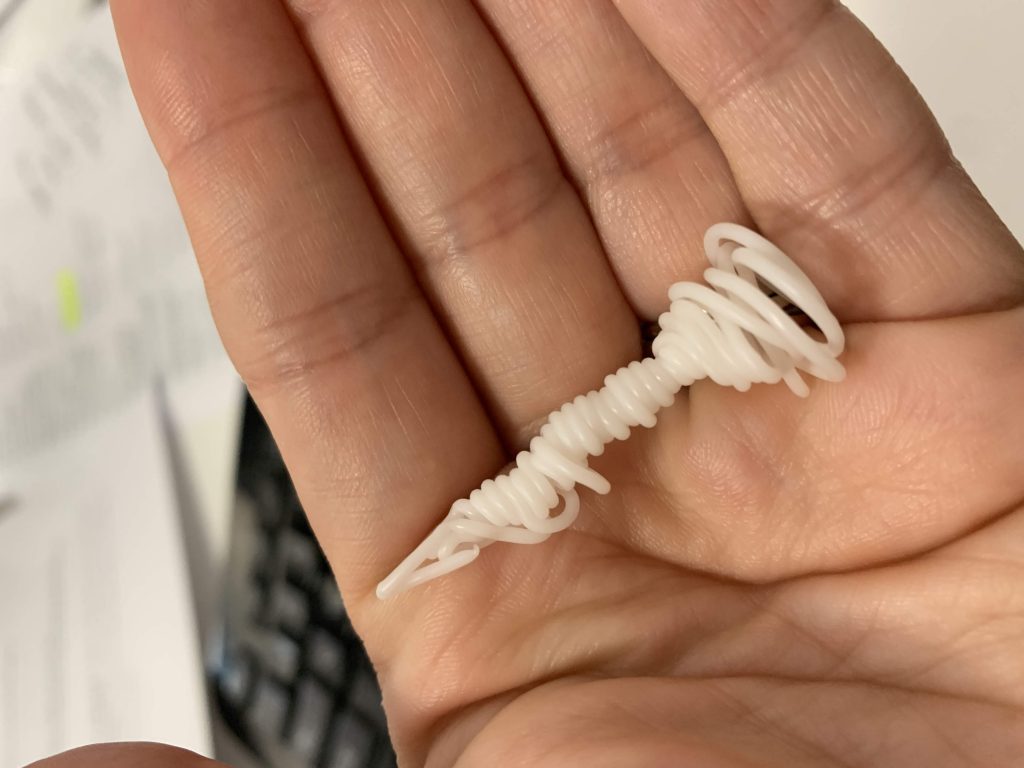
On the advice of my handy husband, I watched a YouTube video and learned how the buttons worked.
Sure enough, I could stop and start the flow of plastic as needed. It also ran on three speeds, so I could work slowly around a difficult part and speed up when colouring in a larger area.
Then I actually started making some really cool stuff …


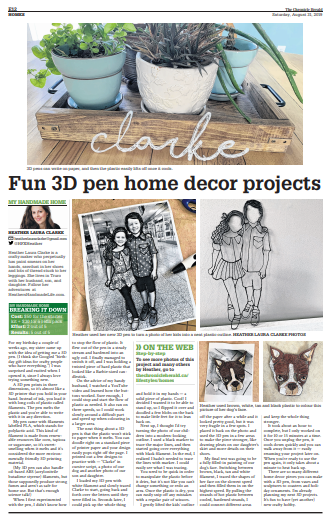
Continue reading in my weekly DIY column, My Handmade Home …
Updated living room photo ledges

Sometimes you can’t see a project’s flaws until it’s too late, and there’s nothing left to do except … start over again.
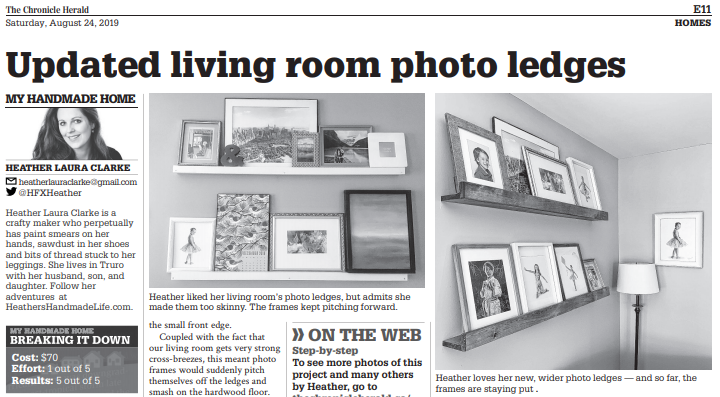
That was the case with our living room photo ledges. I’d decided, three years ago, to take down our floating shelves and replace them with wooden photo ledges. I loved the idea of swapping out frames whenever I felt like it — without making dozens of holes in the walls.
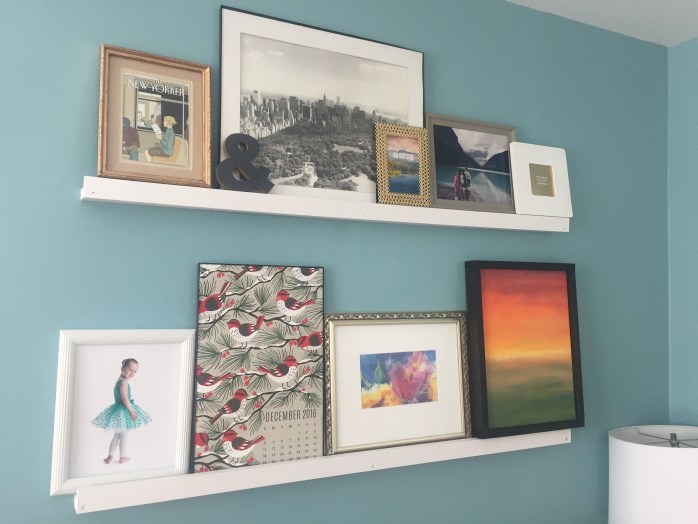
When I built our first set of photo ledges, I used skinny 1×2 and tiny L-brackets so the cost was just $15 for two ledges. They looked pretty good, but I didn’t think about the fact that skinny ledges wouldn’t give the frames much room to lean back against the wall. They were almost standing straight up, teetering precariously behind the small front edge.
Coupled with the fact that our living room gets very strong cross-breezes, this meant photo frames would suddenly pitch themselves off the ledges and smash on the hardwood floor. I’d lean the frames back up — minus the shattered glass — and we’d forget about the problem until the next sharp breeze sent another one tumbling down onto the couch.

So when my Handy Husband asked me what I wanted for my birthday a few weeks ago, I knew exactly what he could give me: new 8×10 frames and for him to build me thicker photo ledges that would let the frames to really LEAN …
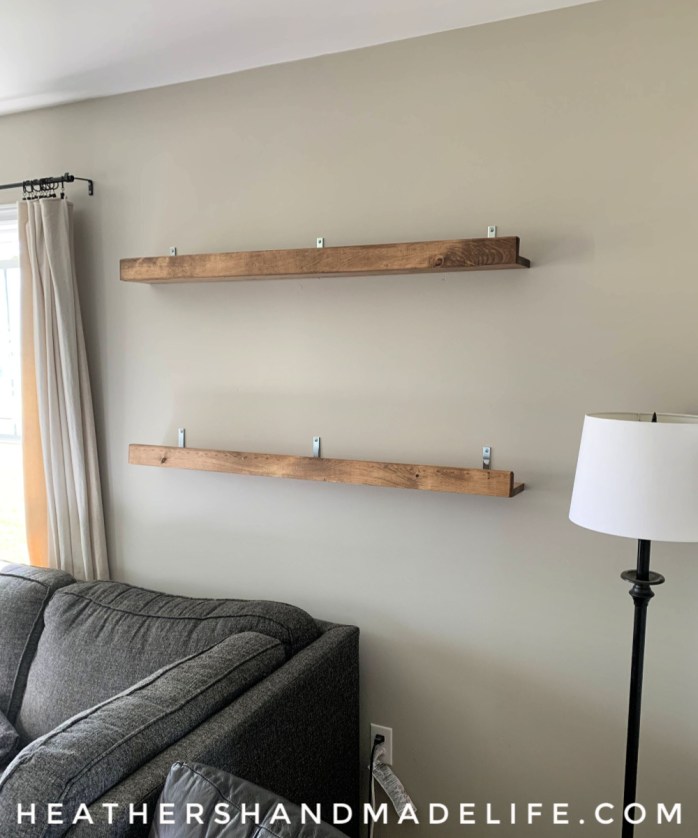
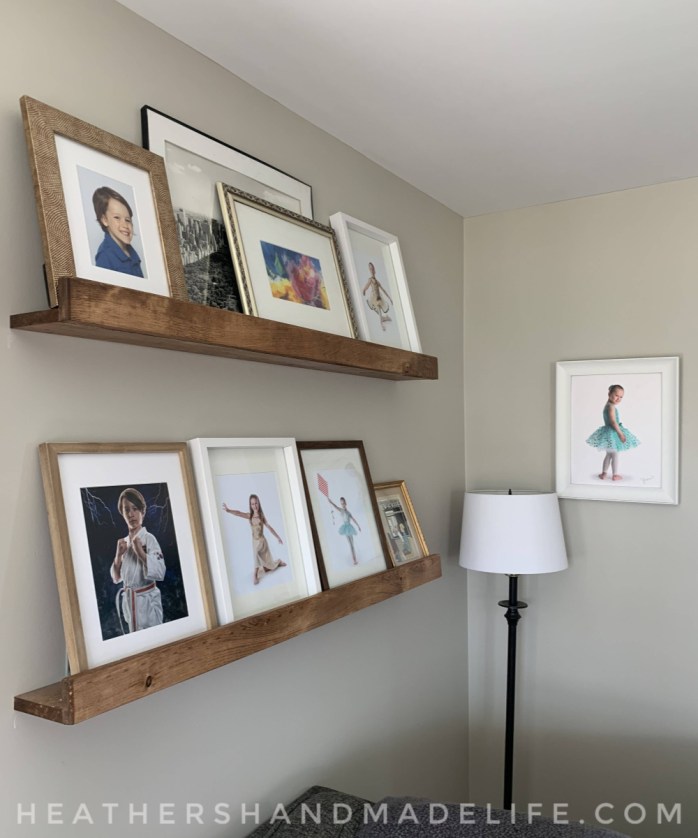
Read the full tutorial in my weekly DIY column, My Handmade Home …
School lunch container tips & tricks

Our kids head back to school in 15 days. (But who’s counting?)

I can tell they’re ready for it because yesterday they actually argued over who got to wash the new Tupperware lunch containers. Once I stopped laughing at the fact that they were FIGHTING TO WASH THE DISHES, I told them one person could scrub while the other rinsed, and then they’d trade.

They did, and they were very pleased with their work.

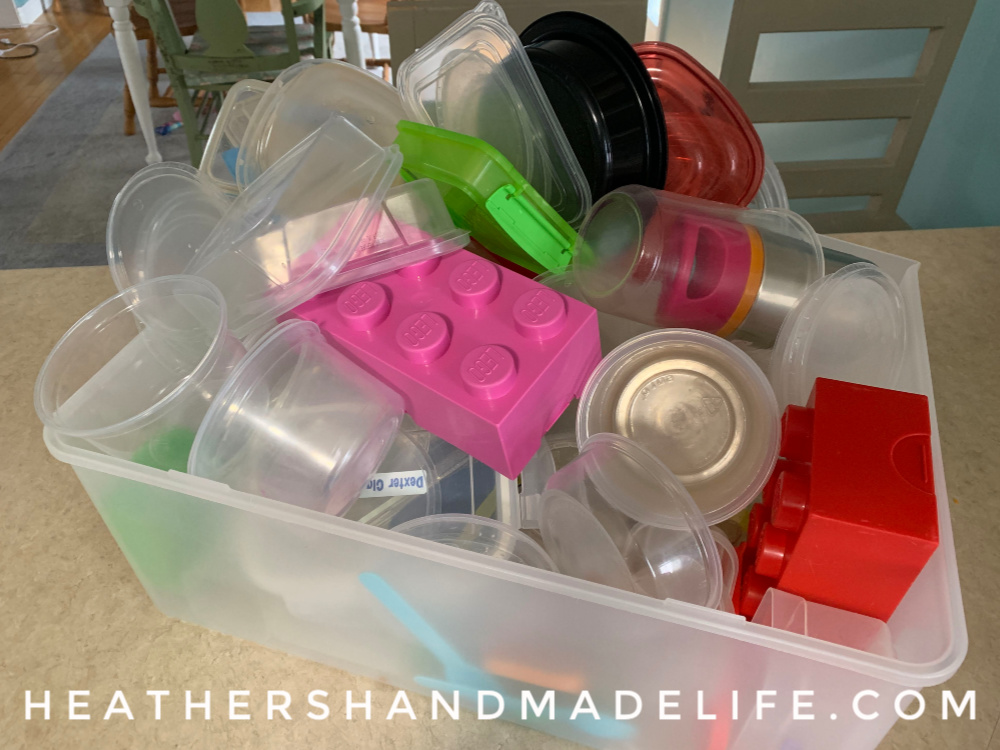
I dried them off and started to label them, and then I realized I’d need to clean out our “school lunch container bin” before I added our pretty new pieces.
YUCK. We’d gotten lazy over the summer and kept randomly tossing in ANY lunch container, so it was a disaster.
DIY tire tower for the backyard

We add something new to our backyard playground every summer, and it’s fun to see how our additions evolve as our kids get older.
The wooden seesaw we built for them when they were preschoolers still gets a lot of use …

… but now they’re more interested in scaling the roof of the treehouse (yikes!) or daring each other to leap from the top of the monkey bars.
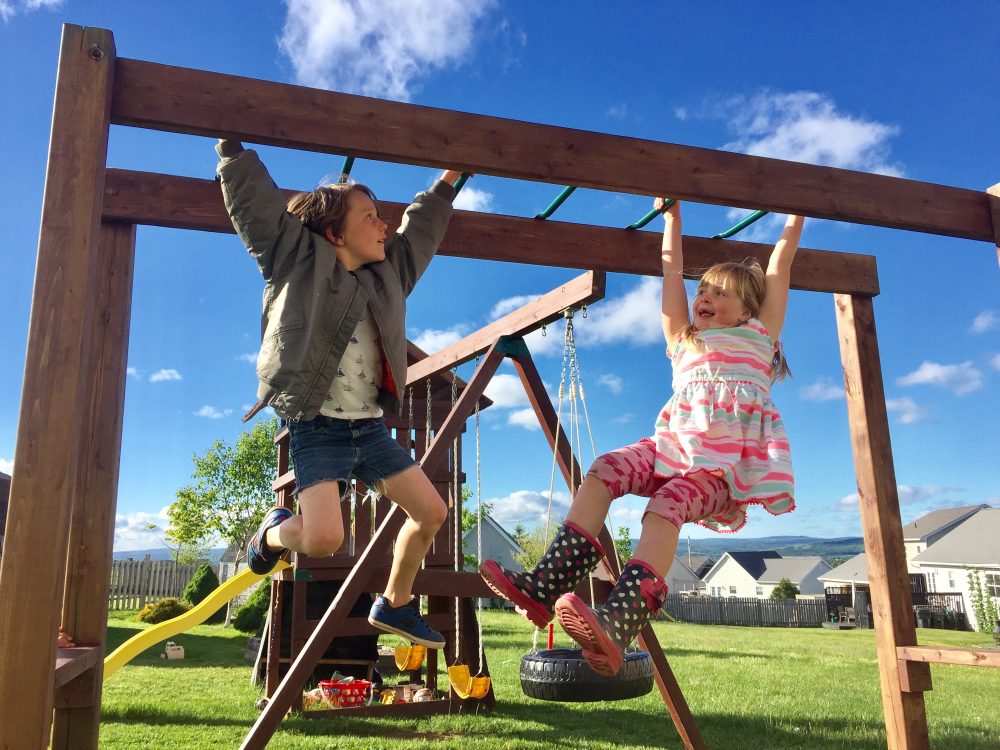
I knew this summer’s new addition had to reflect the fact that they’re now seven and nine years old — and very adventurous — so the answer was obvious: something high and challenging. A DIY tire tower!

We had four old winter tires taking up space below the deck, so we were off and running. We still needed to buy the rest of the supplies — three 4x4x10 posts, two 2x8x10 boards, three ground spikes, four heavy-duty metal brackets, 12 three-inch lag bolts with washers and about 20 three-inch wood screws — which ran us about $170.
Not bad for a brand-new (and huge) piece of playground equipment, though.
Continue reading in my weekly DIY column, My Handmade Home …
… or pin this idea and come back to read the instructions later!










As featured on …