How to oil paint over a photo

I was working on a few handmade gifts leading up to Christmas when I realized the hardest part of oil painting isn’t the painting itself — it’s getting the scale right.
I was painting a portrait of my mom’s cat and struggled mightily to get the position of the eyes just right. No matter how carefully I thought I’d transferred the details from the photograph to the canvas, using a pencil, the cat’s face just felt … wrong.
I grudgingly finished the painting and decided it was OK, but I kept thinking there had to be a better way. Some kind of method for getting the basic shapes from a photograph perfectly transferred to a canvas so I could get the scale right.
Well … what if I painted directly over a photograph? I decided to give it a try.
I wasn’t sure if oil paint would adhere to glossy photo paper, so I went online and ordered a few photos to be printed on white 100 pound cardstock. I decided to start with one of my sister’s wedding photos — taken by the extremely talented Evan McMaster, a Halifax wedding photographer — since she’d just gotten married over Labour Day weekend.
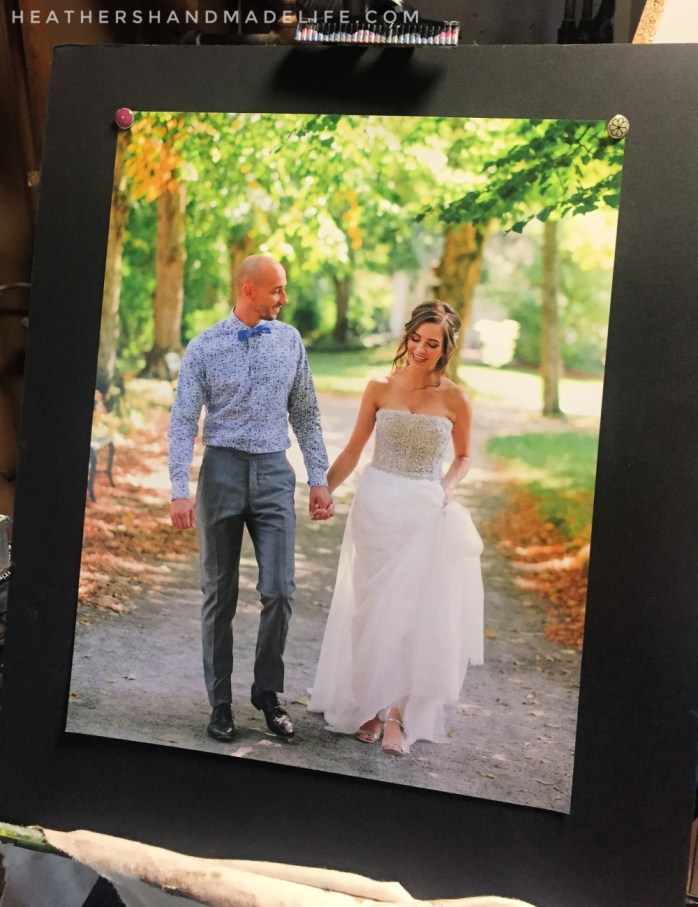
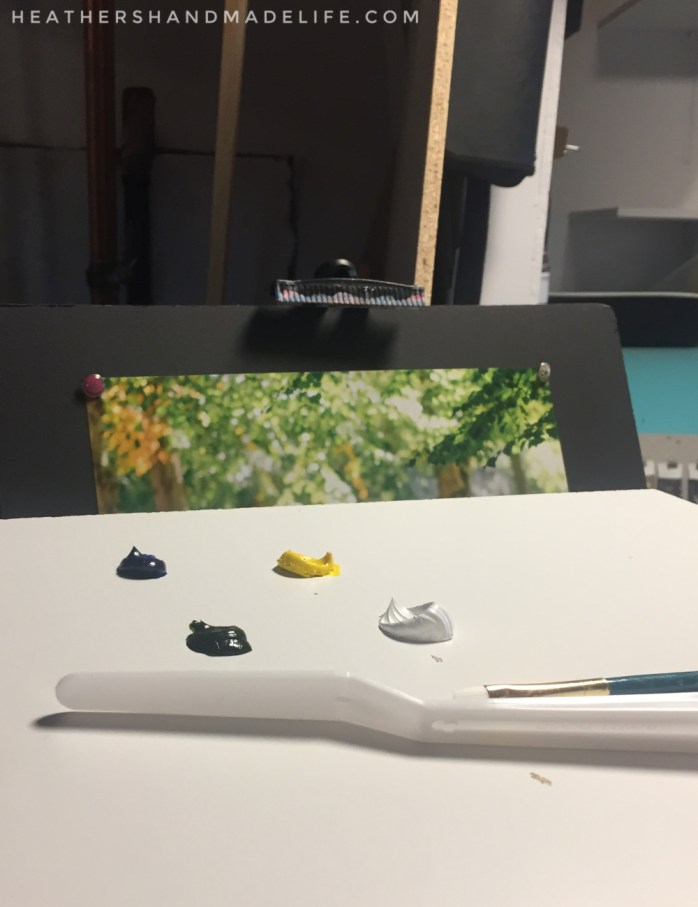
I tacked the photo to a piece of cardboard on my easel and nervously decided to start with the background. These are the oil paints I have, by the way! (Affiliate link)
I mixed blue, green, yellow and white to make the different shades of the trees of the Public Gardens.
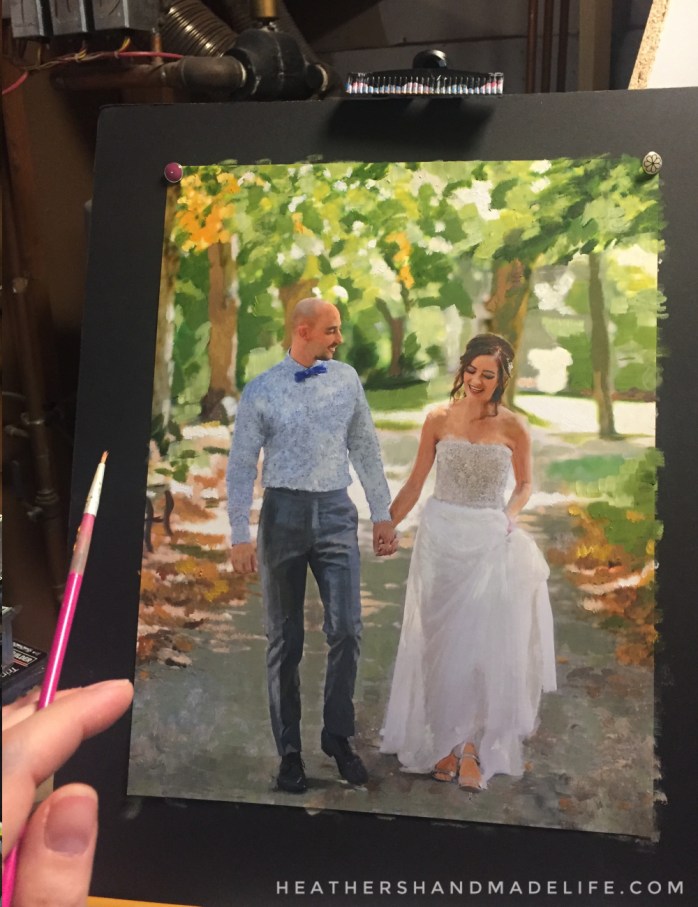
I just moved around the picture filling in areas that matched up with the colour on my brush.

‘Hey! It’s like paint-by-number,’ I realized. Instead of looking around a canvas for tiny number fours or eights, I was scanning for a particular shade of green that needed to be filled in.
Ready for more details on the technique? Continue reading in my weekly DIY column, My Handmade Home …

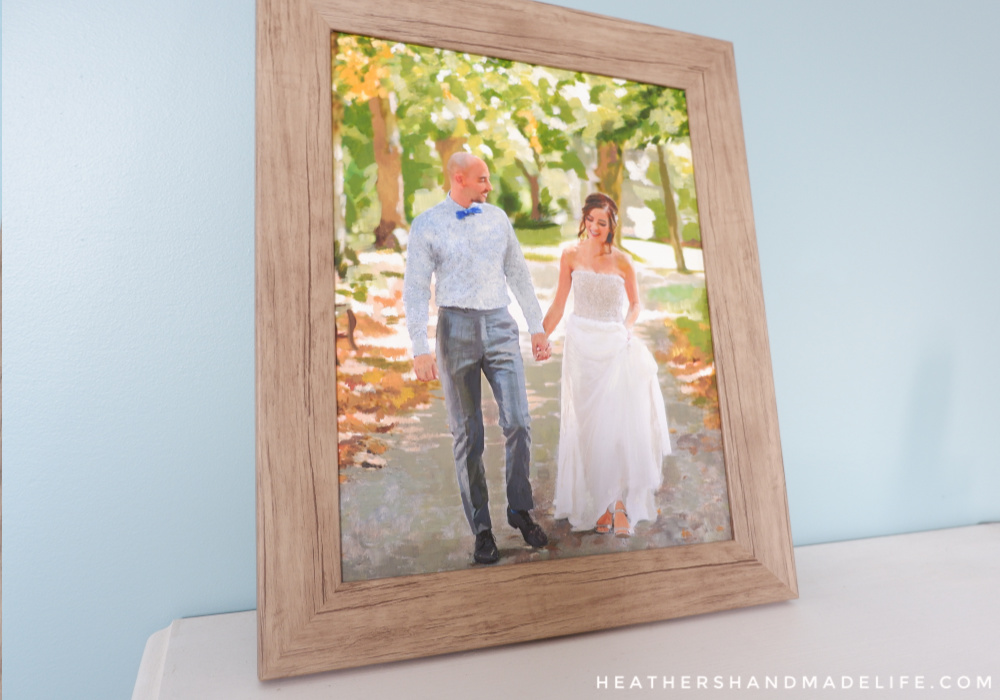
Want to remember this technique for a future project? Be sure to pin it!
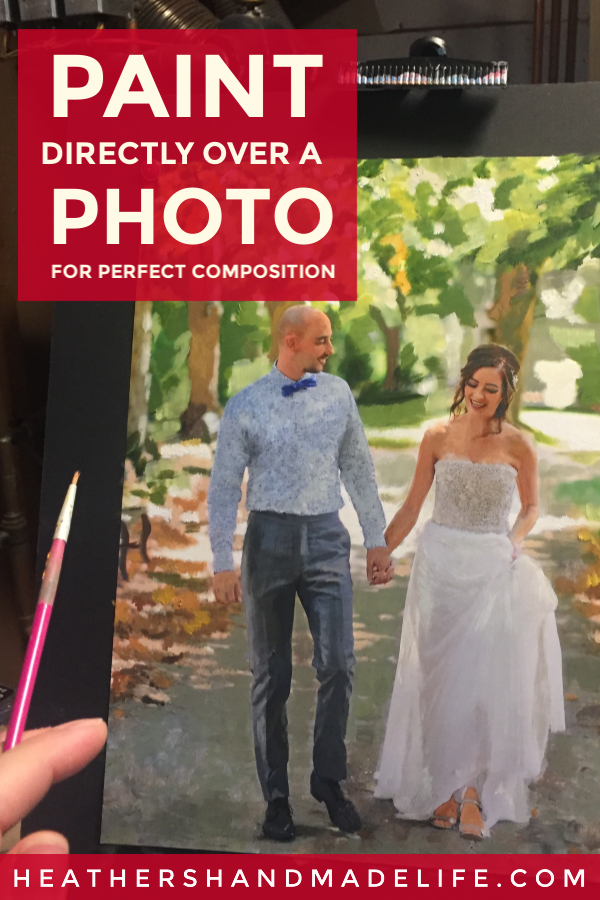
Pin this project for later!
Easy fix for cracked leather stools
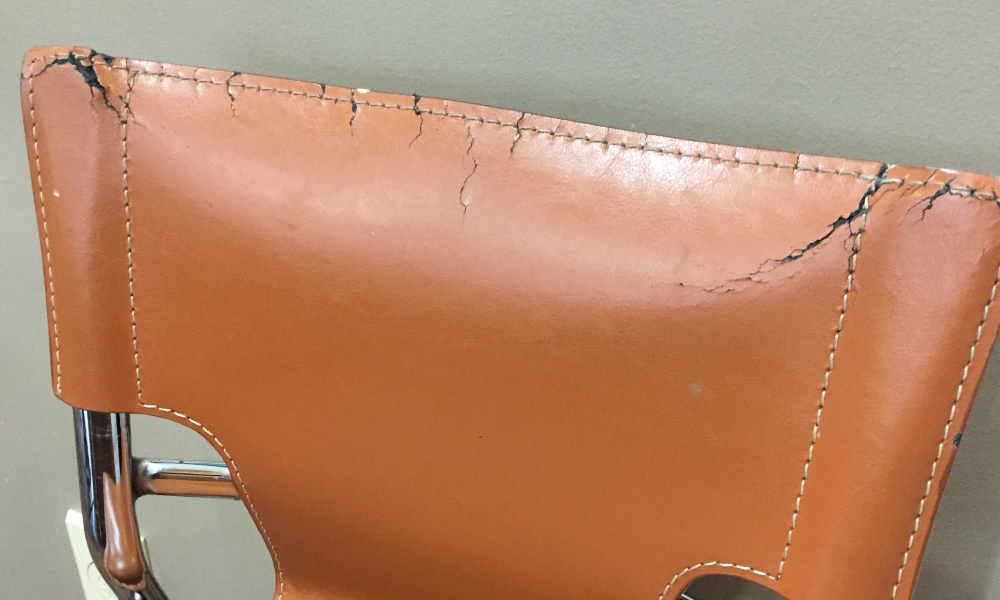
One of the greatest benefits of knowing how to sew is being able to repair things that would otherwise need to be thrown away and replaced.
Often this means mending a hole in someone’s jacket or stitching up a rip in someone’s heirloom quilt, but sometimes I use my sewing skills to fix something a bit more unusual … like furniture.
I was in my friend’s house recently to make a decorating plan for her daughter’s bedroom when we stopped in the kitchen. She mentioned she might ask me to help her choose new stools for their island, since the faux leather was cracking on the backs of the ones they were using.

“You don’t need to get rid of those stools!” I exclaimed. They were nice ones — tan faux leather with stainless steel bars. “We could just slipcover the cracked leather backs.”
And so we did.

Continue reading in my weekly DIY column, My Handmade Home …
Upgrade doors with a quick hardware swap
*** Schlage provided me with the hardware for this post. As always, all opinions are my own. ***
Sometimes it’s hard to believe we moved into our builder-basic house in the fall of 2011 — about seven-and-a-half years ago. We’ve changed so much since then, the house is practically unrecognizable.
Well, until I turn around and see a leftover “basic” feature, like the thin, ribbed carpet (yuck) or the boob-style ceiling lights we have yet to replace.
One of the most ho-hum features of our house was the door knobs: plain globes of brushed nickel. No matter how you painted the walls — and believe me, we’ve painted almost every room two to three times — there they were, inoffensive, but undeniably basic.

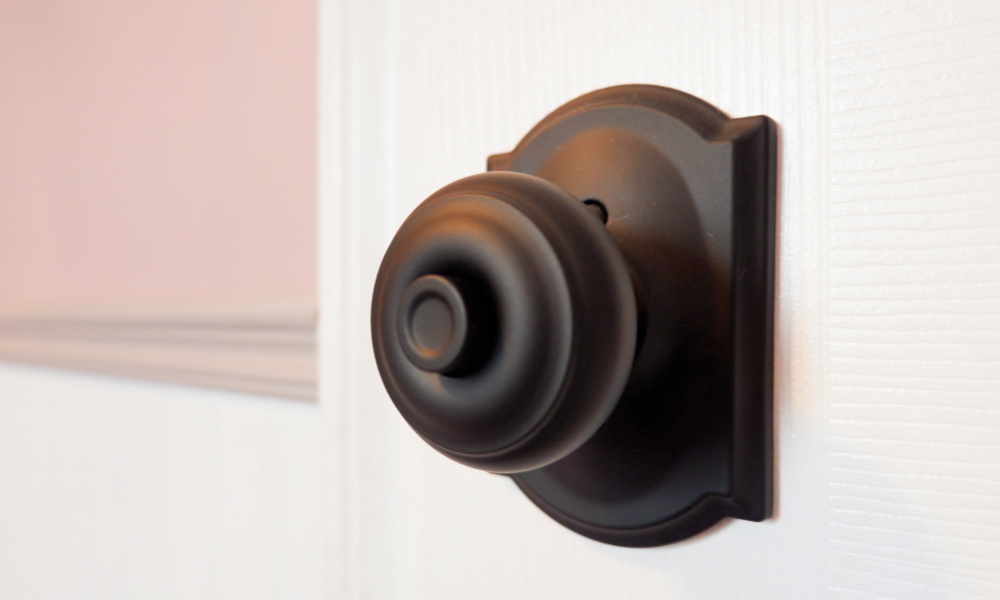
So when Schlage asked if I wanted to try replacing them with ones that actually suited our modern farmhouse decorating style, I did a little doorway happy dance. I’d always loved the contrasting look of white doors with black door knobs and backplates — oh, how I loved the look of backplates.
I immediately picked out the Georgian knob with Camelot trim in a matte black finish, knowing it would pop gorgeously against our white doors and mostly neutral wall colours. We needed the locking Bed & Bath versions for the bedrooms and bathrooms, and Hall & Closet versions for the linen closet, our bedroom closet and the basement closet.

I dove into the boxes when they arrived, a little surprised by the intricacies of each knob set. I guess I hadn’t ever looked at the inside of a door knob before. Luckily, all it took was a single screwdriver to remove our old knobs and install the gorgeous new ones …
Continue reading in my weekly DIY column, My Handmade Home …
Bye, Siri. Hello, Alexa!

We used to be a family of four: me, my husband, our son and our daughter. But since Christmas, we’re the Clarkes, party of five.
I’d like to introduce you to our new overlord, Alexa.*
It started so casually. I took advantage of a Black Friday sale and ordered myself two half-price Echo Dots* as a Christmas gift from my husband. I also hinted to my sister that she could buy me a third as her gift. I wanted three so I could put one on each level of our house and use them as intercoms.
I excitedly set them up on Christmas morning and started playing with the Alexa app. I pictured myself using the devices for day-to-day reminders (e.g. “Alexa, add eggs to the grocery list.”) and maybe she’d replace Siri occasionally.
I never expected my entire family to become instantly obsessed with her.
“Alexa, play Shake It Off by Taylor Swift!” our daughter shouted at the kitchen Alexa, while our son interjected “No! Alexa, tell me a joke!”
“Guys! Stop! She was in the middle of asking me the question of the day!” I protested.
“Alexa, play The Greatest Showman soundtrack!”
“No! Alexa, tell me a story about Lego!”
“Alexa! Alexa! ALEXAAA!”
It was not even noon on Christmas Day. I swear, if poor Alexa had the power to unplug herself and hop out the door, I think she would have quit on us.

Even my husband — who hadn’t seemed interested at first — jumped on Team Alexa when he realized we had a free trial subscription to Amazon Music and she’d play anything he wanted.
“Alexa, play November Rain by Guns N’ Roses.”
“Alexa, play Children by Robert Miles.”
“Alexa, play the Hardwell on Air podcast.”
He got really into it, especially when he learned her name and stopped calling her “Alexis.”
I discovered the announcement feature, which lets you type something into the app (or record it in your own voice) and Alexa will broadcast it throughout the house. I found it hilarious when I made her say “Christmas is cancelled. Please report to the kitchen for holiday spankings.” (Our youngest actually believed her for one tearful minute.)
You can use the Amazon Alexa app to program custom reminders and routines for her to announce, so I’ve been having fun adding those in.
- Every weekday morning at 7:17 a.m. she automatically says “The school bus will be arriving shortly. It’s time to get ready to walk to the bus. Please don’t forget to put your dishes by the sink and push in your chair. Have a wonderful day!”
- When we say “Alexa, time for school!” she replies “OK. Dexter and Charlotte, I hope you have a great day at school. Work hard and be nice to people, and I’ll see you this afternoon.”
- When we say “Alexa, I’m home!” she replies “I missed you while you were gone. So did Annabelle. ‘Woof,’ she cried. ‘Woof woof!’ Please don’t ever leave me again. Even sentient robots get lonely.”
We all use her mostly for playing music, but everyone seems to have their favourite secondary Alexa feature.
My husband asks her the weather when he’s getting ready for work. Our daughter asks her to tell jokes or read stories. I delight in programming custom routines. (When I say “Alexa, time for work!” she turns on my office lights, tells me I’m going to have an amazing, productive day and starts playing Dolly Parton’s 9 to 5.)
Our son’s favourite feature is the “drop-in,” which lets you talk to someone who’s near another device. He loves dropping in on my office to ask me a question about his computer, or dropping in on the kitchen from upstairs to ask whether or not his jeans need to be washed.
Alexa has only been part of our family for a couple of weeks, but it’s like we’ve had her forever.
I do feel a little guilty about how infrequently I’ve been using Siri on my phone, though. I imagine she hates Alexa for busting into her territory, but maybe she is appreciating the vacation?
DIY computer desk
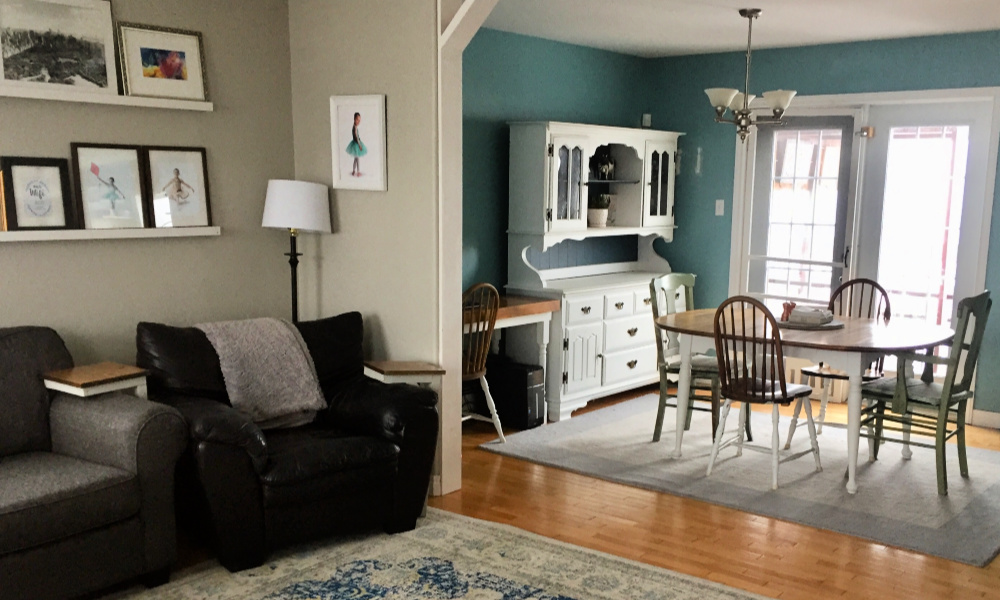
Our eight-and-a-half year old son had been begging for a computer for Christmas. We eventually decided we’d “gift” him with my desktop computer since I was due for an upgrade. (He would get the brand-new keyboard, mouse, speakers and headphones, but I’d get the new tower and monitor.)
There was no question about where his computer would go: right in the dining area, in plain view, where we could keep an eye on things from anywhere on the main level.

But that meant moving one of our hutches to make room for a new, larger desk — instead of the tiny, rarely-used built-in one we’d tucked in a corner.
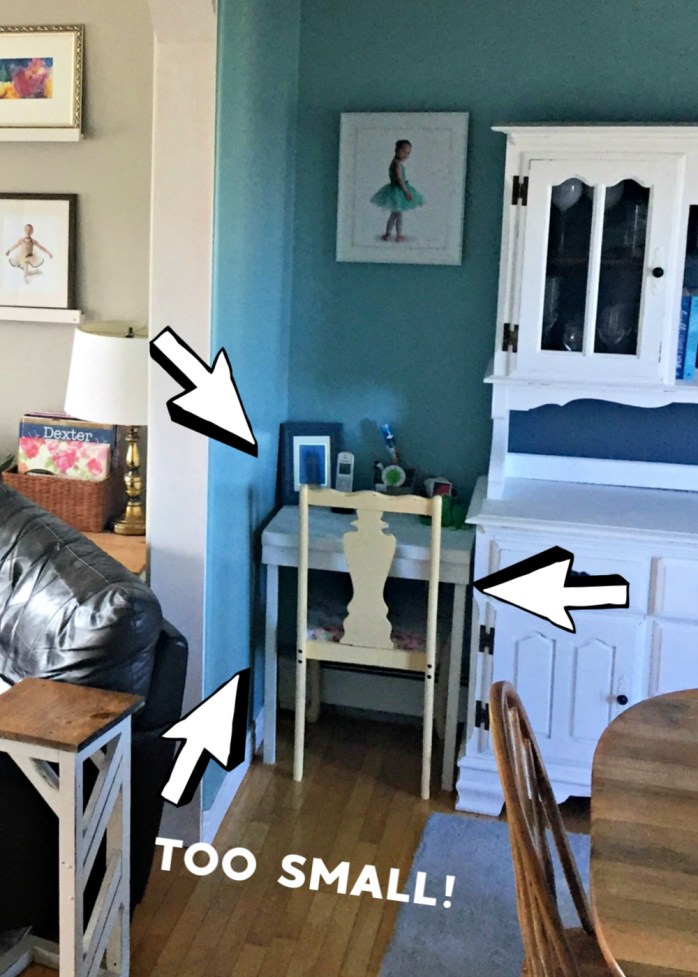
We usually build simple, modern desks out of 2x4s and sheets of white melamine, but that wasn’t going to work for our farmhouse-style main level. Whatever we built would need to match the dining table, chairs and nearby coffee table — white legs, stained wooden tops — and mimic the classic, vintage feel of their turned legs.
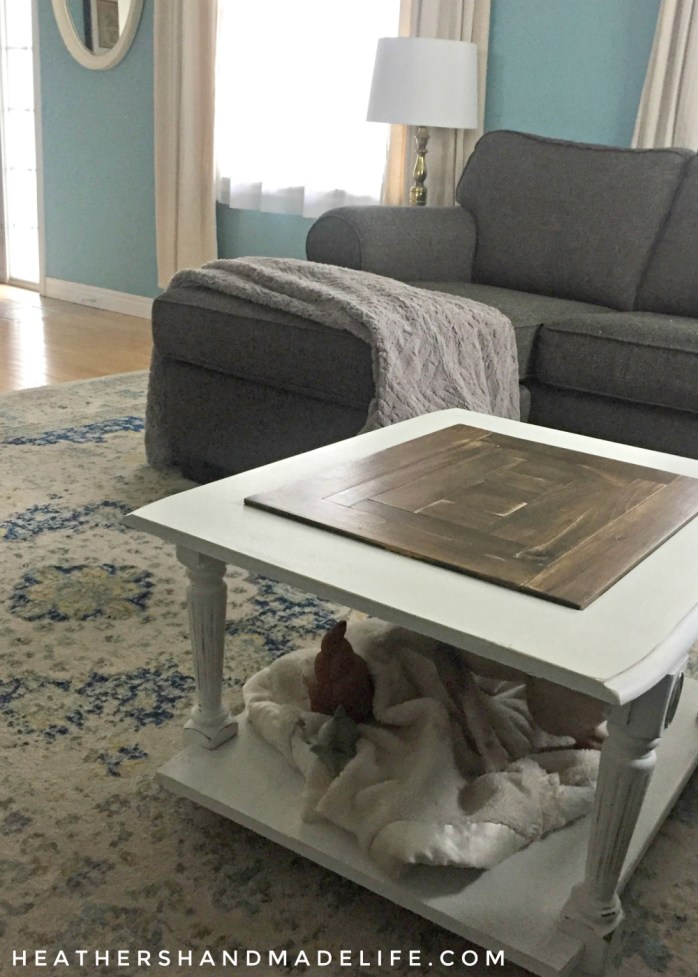
I sketched out what I wanted and presented it to my handy husband, since he’s better at building anything load-bearing and, um, important. It seemed pretty simple. I wanted turned spindle-like legs to match the dining table and chairs, a thick-looking wooden desktop I could stain dark, and an “apron” under the desktop that could be painted white.
… He didn’t see my vision.
Continue reading in my weekly DIY column, My Handmade Home …










As featured on …



 Heather's Handmade Life